


A timing belt is one of the most important components inside many modern car engines. Although it is not usually visible during everyday driving, its job is critical: it keeps the engine’s internal components operating in the correct sequence. When a timing belt becomes worn, damaged, or breaks unexpectedly, the consequences can be serious and potentially expensive.
For drivers, understanding when and why a timing belt needs attention can help prevent avoidable engine problems. Whether you are looking into Timing Belt Replacements Trowbridge or comparing Timing Belt Replacements UK services, knowing what influences replacement intervals, costs, and workmanship is essential.

1. What Does a Timing Belt Actually Do?
The timing belt synchronises the movement of the engine’s camshaft and crankshaft. This allows the engine’s valves to open and close at the appropriate moments in relation to the movement of the pistons.
A timing belt normally operates under demanding conditions. It is exposed to heat, friction, tension, and repeated movement every time the engine runs. Over time, the belt’s rubber-based materials can deteriorate even when there are no obvious symptoms from the driver’s seat.
A functioning timing system is therefore essential for efficient and controlled engine operation.
If the belt loses its correct timing or breaks, the camshaft and crankshaft can become unsynchronised. On some engines, this can result in contact between pistons and valves, potentially causing extensive internal engine damage.
2. Mileage Is Not the Only Factor
One of the most common misconceptions is that timing belts only need replacing when a vehicle reaches a particular mileage.
In reality, replacement intervals vary significantly according to the vehicle manufacturer, engine design, driving conditions, and age of the belt. A vehicle that has covered relatively few miles may still require replacement because the belt has aged.
Drivers should therefore check their vehicle manufacturer’s recommended maintenance schedule rather than relying on mileage alone.
Factors that can affect timing belt life include:
Vehicle age
Engine type and design
Mileage
Driving conditions
Temperature and environmental conditions
Oil or coolant contamination
Previous maintenance quality
Long periods of vehicle inactivity
Keeping records of previous replacement work is also important, particularly when buying a used vehicle.
3. Why Regular Inspection Matters
Timing belts can deteriorate internally without producing obvious warning signs. While visible cracking, fraying, or contamination may sometimes be detected during inspection, the absence of visible damage does not necessarily mean a belt is safe for continued use.
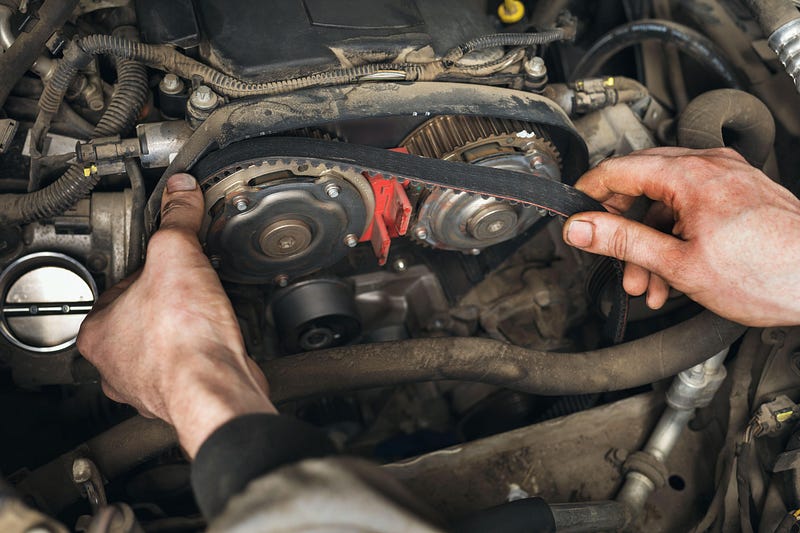
This is why professional inspection and adherence to manufacturer intervals are important parts of preventative maintenance.
During appropriate maintenance work, technicians may also consider associated components such as:
Tensioners
Idler pulleys
Water pumps
Drive belts
Seals
Other timing-system components
Replacing related worn components at the appropriate time can reduce the risk of having to dismantle the same area of the engine again shortly afterwards.
4. Wet Timing Belts Require Particular Attention
Not every timing belt operates in the same environment. Some modern engines use a wet timing belt, which operates inside the engine and is exposed to engine oil.
Wet belt systems can offer engineering and packaging advantages, but they also require the correct maintenance approach. Oil quality, correct lubricant specification, servicing history, and belt condition can all be relevant to the longevity of the system.
This has made wet timing belt replacement cost an increasingly important consideration for owners of vehicles fitted with these systems.
The final cost can vary depending on the vehicle, engine configuration, parts required, labour time, and whether additional components need attention. Drivers should avoid choosing a service based solely on the cheapest quoted figure. Understanding exactly what is included in a quotation provides a more useful comparison.

5. What Determines Timing Belt Replacement Cost?
There is no universal price for timing belt replacement because different vehicles require different procedures and parts.
Several factors can influence the overall cost:
Vehicle and engine design
Some engines provide relatively straightforward access to the timing system, while others require considerably more dismantling.
Parts required
A basic belt replacement may not represent the complete recommended maintenance procedure. A manufacturer may specify replacement of tensioners, pulleys, or a water pump at the same time.
Labour requirements
Workshop labour rates vary across the UK, while the complexity of the particular engine can significantly affect the number of labour hours involved.
Additional faults
Oil leaks, damaged components, or other problems discovered during inspection may increase the final repair requirements.
For this reason, a professional quotation should clearly explain which parts and labour are included.
6. Choosing Timing Belt Replacements Services
When comparing Timing Belt Replacements Services, motorists should look beyond headline pricing and consider the quality and transparency of the work.
A suitable service provider should be able to explain the recommended replacement interval for the vehicle, identify the relevant engine components, and provide information about the parts being installed.
Useful questions to ask include:
What replacement interval applies to my vehicle?
Does the replacement include tensioners and pulleys?
Should the water pump be replaced at the same time?
What parts are being fitted?
Is there evidence of previous timing belt replacement?
What warranty or documentation is provided?
Are additional faults identified during the inspection?
Clear answers to these questions can help motorists make a better-informed maintenance decision.
7. Timing Belts and Used Cars
Timing belt history is particularly important when purchasing a second-hand vehicle.

If the seller cannot provide reliable evidence of when the timing belt was last replaced, it may be difficult to establish how much service life remains. In such situations, a buyer should consider having the vehicle professionally assessed and factor potential timing-system maintenance into the ownership budget.
Service invoices, manufacturer records, and workshop documentation can provide useful evidence.
This is especially relevant for older vehicles where the timing belt may have reached its age-based replacement interval even if the car has relatively low mileage.
8. Warning Signs Should Not Be Ignored
A timing belt does not always provide obvious warning signs before failure. However, unusual engine behaviour should never be ignored.
Potential symptoms of an engine or timing-system problem can include:
Difficulty starting
Rough or irregular engine operation
Unusual ticking or rattling noises
Engine misfiring
Reduced performance
Warning lights
Visible oil contamination around relevant components
These symptoms can have many different causes, so they should not automatically be interpreted as evidence of a failing timing belt. Professional diagnosis is the appropriate way to identify the underlying problem.
If a timing belt has already broken, repeatedly attempting to start the engine may potentially cause further damage depending on the engine design.
9. Timing Belt Maintenance Is About Prevention
One of the biggest advantages of scheduled timing belt replacement is preventative maintenance.
Replacing a belt before the end of its recommended service interval is generally preferable to waiting for failure. A broken timing belt can turn a scheduled maintenance job into a major engine repair.
For drivers researching Timing Belt Replacements Trowbridge, the same principle applies as it does elsewhere in the UK: maintenance schedules should be based on the specific vehicle and engine rather than assumptions about all timing belts having the same lifespan.

S&M Auto Service, for example, provides information on timing belt replacement services in Trowbridge, helping motorists understand the importance of planned timing-system maintenance.
10. Keep Accurate Maintenance Records
After a timing belt replacement, keeping the invoice and service information is valuable.
A good maintenance record should ideally identify:
Date of replacement
Vehicle mileage
Parts replaced
Engine or vehicle details
Workshop carrying out the work
Any additional components replaced
This information helps establish when the next replacement may be required and can also be useful when the vehicle is sold.
For motorists comparing Timing Belt Replacements UK options, documented maintenance can provide greater confidence that the vehicle’s service history is being properly managed.
Common Challenges and Practical Solutions
Timing belt maintenance often becomes complicated because drivers are unsure about replacement history, manufacturer intervals, or the difference between conventional and wet belt systems.
A practical approach is to:
Check the vehicle handbook or manufacturer’s maintenance schedule.
Confirm whether the engine uses a conventional or wet timing belt.
Check service records for previous replacement work.
Ask a qualified technician to assess relevant components when appropriate.
Request a clear quotation detailing parts and labour.
Keep all documentation after the work is completed.

This approach helps shift timing belt maintenance from reactive repair to preventative vehicle care.
Conclusion
Timing belt maintenance is an important part of responsible vehicle ownership. The belt may be relatively small compared with other engine components, but its role in maintaining precise engine timing makes it essential.
Replacement intervals depend on the individual vehicle and engine, while factors such as age, mileage, driving conditions, belt type, and maintenance history can all influence when attention is required. Wet timing belt systems also require consideration of the correct oil specification and associated components.
Whether researching Timing Belt Replacements Trowbridge, evaluating Timing Belt Replacements UK, or comparing Timing Belt Replacements Services, motorists should focus on manufacturer recommendations, transparent quotations, appropriate parts, and qualified workmanship rather than price alone.
The key takeaway is simple: timing belt replacement is preventative maintenance, not a repair that should normally be postponed until something goes wrong. Keeping accurate records and following the vehicle manufacturer’s recommended schedule can help reduce the risk of unexpected engine damage and support reliable long-term vehicle ownership.
Read More :
Affordable Timing Belt Replacements UK: Costs, Timing and Best Practices
10 Best Car Diagnostic Test Insights for Safer and Smarter Vehicle Maintenance
10 Best Common Problems That a Car Diagnostic Test Can Help Detect
Best 10 Factors That Affect Clutch Replacement Cost in the UK
Best 10 Tips for Finding an Affordable Pre-MOT Check Near Me