

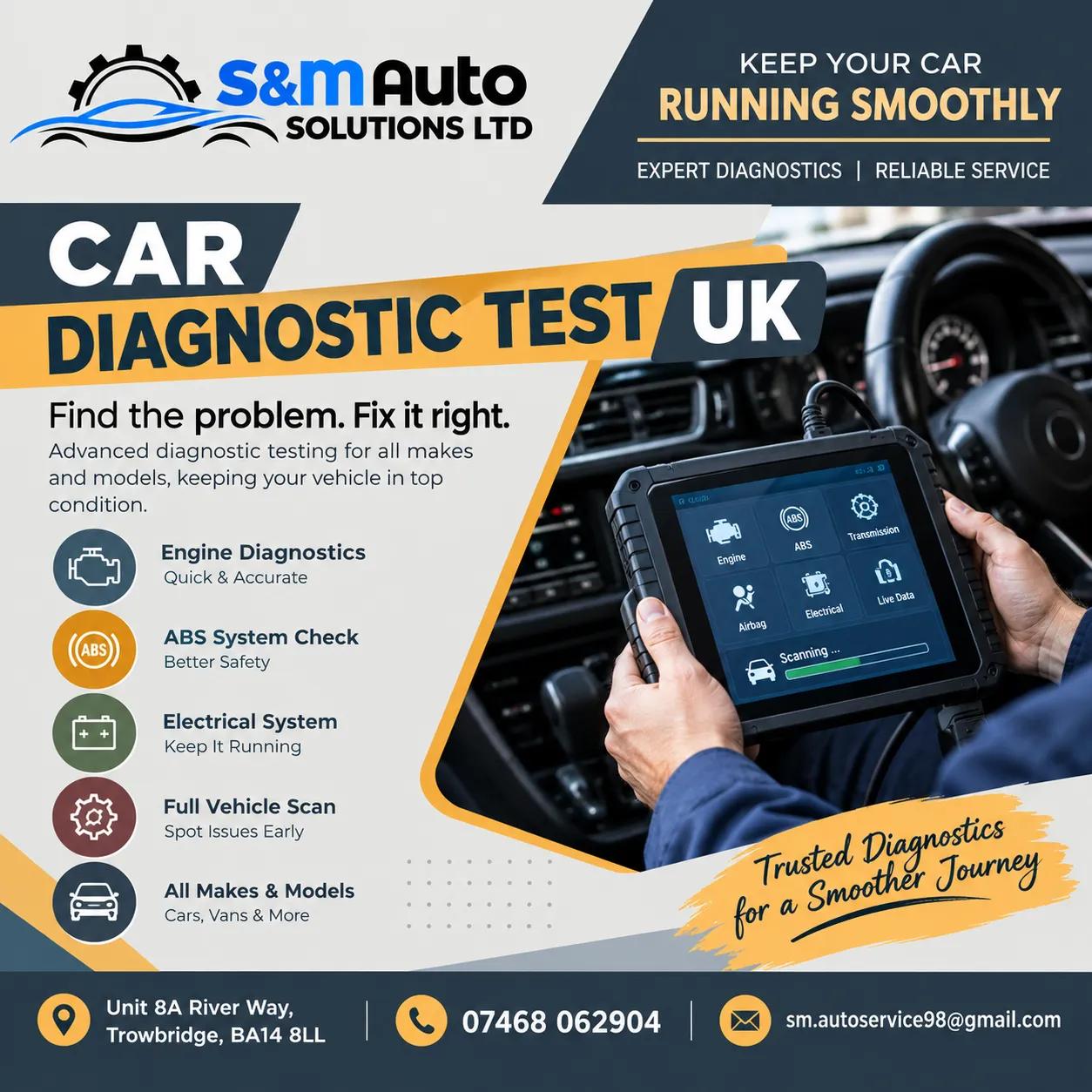
Across the Car Diagnostic Test UK,
Modern vehicles rely on sophisticated electronic systems to manage engine performance, fuel efficiency, emissions, safety features and overall reliability. When a warning light appears on the dashboard, identifying the underlying problem is not always straightforward. A vehicle may display a warning because of a faulty sensor, an electrical issue or a more serious mechanical fault.
A car diagnostic test helps technicians investigate these issues by retrieving information from a vehicle’s onboard computer. Rather than relying solely on visual inspections or guesswork, diagnostic equipment provides useful fault codes and system data that help narrow down potential causes. Understanding how this process works can help drivers make informed maintenance decisions and reduce the risk of unexpected breakdowns.
What Is a Car Diagnostic Test and How Does It Work?
A vehicle diagnostic test involves connecting specialised scanning equipment to the car’s onboard diagnostics system, commonly known as OBD or OBD-II. This system monitors various components and records fault codes when certain operating conditions fall outside expected parameters.
During a diagnostic assessment, a technician may examine:
Engine management: Fuel delivery, ignition performance, airflow and engine sensors.
Emissions systems: Components such as oxygen sensors and exhaust gas recirculation systems.
Transmission systems: Electronic faults affecting automatic or electronically controlled gearboxes.
Electrical systems: Issues involving sensors, wiring and communication between electronic control units.
Safety systems: Relevant faults within ABS braking systems, airbags and other electronically monitored features, depending on the vehicle and diagnostic equipment.
The scanner retrieves stored, pending or active fault codes, where supported. The technician then interprets these codes alongside live data, vehicle symptoms and relevant technical information.
Importantly, a fault code does not automatically identify a defective part. For example, an oxygen sensor-related code could result from a damaged sensor, an exhaust leak, wiring damage or another underlying issue. Further testing is often necessary before recommending a repair.

Common Signs That a Vehicle Needs Diagnostic Testing
Some vehicle problems develop gradually, while others appear suddenly. Recognising early warning signs can help drivers investigate issues before they become more expensive to resolve.
Common reasons to arrange a diagnostic assessment include:
An illuminated engine management warning light.
Reduced acceleration or unusual engine performance.
Increased fuel consumption without an obvious explanation.
Rough idling, hesitation or difficulty starting.
Unexpected stalling or intermittent running problems.
Warning messages relating to braking, transmission or other electronic systems.
Emissions-related concerns or a failed emissions test.
Drivers should also consider diagnostics when a vehicle develops recurring symptoms after a repair. If a warning light returns shortly after a component has been replaced, the original fault may not have been fully resolved.
A flashing engine warning light can indicate a potentially damaging problem, such as an engine misfire. In such circumstances, drivers should follow the vehicle manufacturer’s safety guidance, stop when safe if necessary and seek professional advice rather than continuing to drive.
Car Diagnostic Test UK: Why Accurate Fault-Finding Matters
Across the Car Diagnostic Test UK, increasingly complex vehicle technology has made electronic fault-finding an important part of routine vehicle maintenance. Modern cars can contain multiple interconnected control modules, and a fault in one area may affect the operation of another.
This complexity makes a structured diagnostic process particularly valuable. Instead of replacing parts based on assumptions, technicians can use recorded codes, live sensor readings and targeted checks to establish a more reliable diagnosis.
A typical process may involve:
Discussing the symptoms: The technician asks when the problem occurs, whether warning lights are present and whether recent repairs or changes could be relevant.
Scanning the vehicle: Compatible equipment retrieves available fault codes and system information.
Interpreting the results: Codes are compared with symptoms, manufacturer specifications and other available evidence.
Carrying out further tests: Electrical measurements, visual inspections or component checks help confirm the suspected cause.
Explaining the findings: The technician outlines the identified fault, recommended repairs and any additional investigation required.
This method supports more informed decisions and can help prevent unnecessary component replacement. However, diagnostic equipment has limitations: not every mechanical problem generates a fault code, and some intermittent faults require additional investigation.

Practical Ways to Prevent Recurring Vehicle Problems
Diagnostic testing is most effective when combined with sensible maintenance practices. Drivers can reduce the likelihood of avoidable faults by following the manufacturer’s service schedule and responding promptly to changes in vehicle behaviour.
Useful preventative measures include:
Checking engine oil, coolant and other essential fluids at the recommended intervals.
Maintaining the battery and charging system, particularly before winter.
Investigating dashboard warnings instead of repeatedly resetting them.
Keeping records of previous repairs, fault codes and recurring symptoms.
Using suitable replacement components and following manufacturer repair procedures.
Arranging further testing when a warning returns after a repair.
Battery condition deserves particular attention because low voltage or unstable electrical supply can sometimes trigger multiple warning messages. Similarly, damaged wiring, corroded connections and faulty grounds can create intermittent symptoms that are difficult to identify without systematic testing.
Before an MOT test, drivers may also benefit from investigating existing warning lights or known running issues. Although a diagnostic scan can identify certain electronic problems, it does not replace a full vehicle inspection or guarantee an MOT pass.
Finding a Car Diagnostic Test Near Me
When searching for a car diagnostic test Near Me, drivers should consider more than the availability of a scanning tool. The quality of the interpretation and follow-up testing is equally important.
Useful questions to ask a garage include:
Does the assessment cover the system displaying the warning?
Is further testing included, or charged separately?
Will the findings and recommended repairs be explained clearly?
Can the technician investigate intermittent faults or recurring warning lights?
Will the garage verify the repair after the work is completed?
Drivers in Wiltshire looking for a car diagnostic Trowbridge service can review the information provided by S&M Auto Service to understand the diagnostic support available locally.

Conclusion
Vehicle diagnostics have become an essential part of modern automotive maintenance, helping technicians investigate electronic warnings, performance issues and faults across multiple vehicle systems. Nevertheless, accurate results depend on combining diagnostic equipment with technical knowledge, practical testing and an understanding of the vehicle’s symptoms.
Whether dealing with an illuminated engine warning light, unexplained fuel consumption or an intermittent electrical problem, drivers should treat fault codes as a starting point rather than a definitive diagnosis. Arranging appropriate testing, maintaining the vehicle regularly and addressing confirmed faults promptly can support safer driving, more reliable performance and better control over repair costs.
Contact Us : https://www.smautoservice.co.uk/contact-us/
About Us : https://www.smautoservice.co.uk/about-us/
Social Media :
https://wikinewsportal.com/https-www-smautoservice-co-uk-clutch-repair-replacement-trowbridge-uk-5/
https://vxengine.ru/blogs/3296/When-Should-You-Consider-a-BMW-or-MINI-Timing-Chain
https://blogpulseguru.com/https-www-smautoservice-co-uk-clutch-repair-replacement-trowbridge-uk/
https://linkmate.mn.co/posts/what-should-uk-drivers-know-before-replacing-a-timing-belt
https://www.smautoservice.co.uk/what-are-auto-detailing-services/