

Well-designed soap packaging boxes can serve several
Packaging is often the first physical interaction a customer has with a product. For soap makers, skincare businesses, boutique retailers, and e-commerce brands, the box needs to protect the soap while also communicating quality, ingredients, and brand identity. As consumers become more attentive to sustainability and presentation, packaging choices are increasingly connected to purchasing decisions, product positioning, and the overall customer experience.
Well-designed soap packaging boxes can serve several purposes at once. They protect individual bars during storage and transportation, provide space for essential product information, and create a consistent visual identity across a product range. The challenge is finding a practical balance between appearance, durability, sustainability, and cost.
Choosing Packaging Based on the Soap Product
Not every soap requires the same packaging solution. A handmade cold-process bar, luxury facial soap, hotel amenity soap, and mass-market bath bar can have very different packaging requirements.
Before selecting a box, businesses should consider:
Product dimensions and weight
Moisture and humidity exposure
Expected storage conditions
Shipping requirements
Required printing and branding
Regulatory or labelling information
Target customer expectations
Sustainability objectives
The packaging should fit the product closely enough to prevent excessive movement without making the soap difficult to insert or remove. Oversized packaging can increase material use and shipping volume, while packaging that is too tight may damage the product or create an inconvenient customer experience.
For businesses selling through online marketplaces or their own e-commerce stores, transportation is another important consideration. The box may experience compression, vibration, handling, and changes in temperature during delivery. Structural strength therefore matters just as much as visual design.
Why Soap Boxes With Windows Remain Popular
A transparent window can provide an immediate view of the soap inside the package. This is particularly useful for products where colour, texture, botanical ingredients, decorative patterns, or handcrafted details are part of the appeal.
Soap boxes with window designs can be especially effective for:
Handmade and artisan soaps
Natural and botanical soap bars
Gift sets
Premium skincare products
Seasonal collections
Retail displays
A window can reduce the need for customers to open the package simply to inspect the product. This makes the packaging more suitable for retail shelves and market stalls where customers need to understand the product quickly.

However, window packaging should be designed thoughtfully. The size and position of the window can affect structural strength, and businesses should consider the type of transparent material used. The overall design should still provide enough printable space for branding, ingredients, directions, weight information, and other relevant details.
Small Soap Box Packaging and Product Presentation
For independent soap makers and small retailers, small soap box packaging can offer an efficient way to package individual bars without unnecessary material. Compact boxes are also useful for subscription services, sample products, wedding favours, hotel amenities, and promotional sets.
Small packaging does not have to look basic. A carefully planned combination of typography, colour, finishes, illustrations, and structural details can create a distinctive appearance even when the box itself is compact.
For example, a minimalist design may use a simple logo, product name, ingredient information, and subtle botanical graphics. A more traditional handmade brand may use natural textures, earthy imagery, and craft-inspired typography.

The important principle is consistency. If a business sells several soap varieties, packaging should make it easy to distinguish individual products while maintaining a recognizable family appearance.
The Growing Role of Eco Friendly Soap Packaging
Sustainability has become an important consideration throughout the packaging industry. Customers increasingly encounter terms such as recyclable, biodegradable, compostable, FSC-certified, and plastic-free when evaluating products. However, responsible packaging requires more than simply adding an environmental claim to the box.
Eco friendly soap packaging should be considered from a broader perspective, including material selection, production, transportation, usability, and end-of-life disposal.
Paperboard and kraft-based packaging are commonly considered for soap products because they can provide a printable surface while supporting recyclable packaging strategies where local recycling systems accept the relevant material.

Businesses can also reduce unnecessary environmental impact by:
Selecting an appropriately sized box.
Avoiding unnecessary layers of packaging.
Using recyclable paper-based materials where suitable.
Reducing excessive plastic components.
Choosing efficient structural designs.
Communicating disposal instructions clearly.
Considering the packaging requirements of the entire supply chain.
Environmental claims should always be accurate and specific. For example, describing a package as recyclable does not automatically mean every consumer can recycle it in their local collection system. Clear communication helps prevent misleading sustainability messaging.
Kraft Soap Boxes: Combining Function and Natural Aesthetics
Kraft soap boxes have become a familiar packaging choice for natural, handmade, organic-inspired, and environmentally conscious brands. Their earthy appearance can complement products positioned around simplicity, craftsmanship, botanical ingredients, and sustainability.
Kraft board also provides interesting opportunities for printing. Businesses can leave portions of the natural material visible or combine it with one- or multi-colour printing. The result can range from rustic and handmade to clean and contemporary.
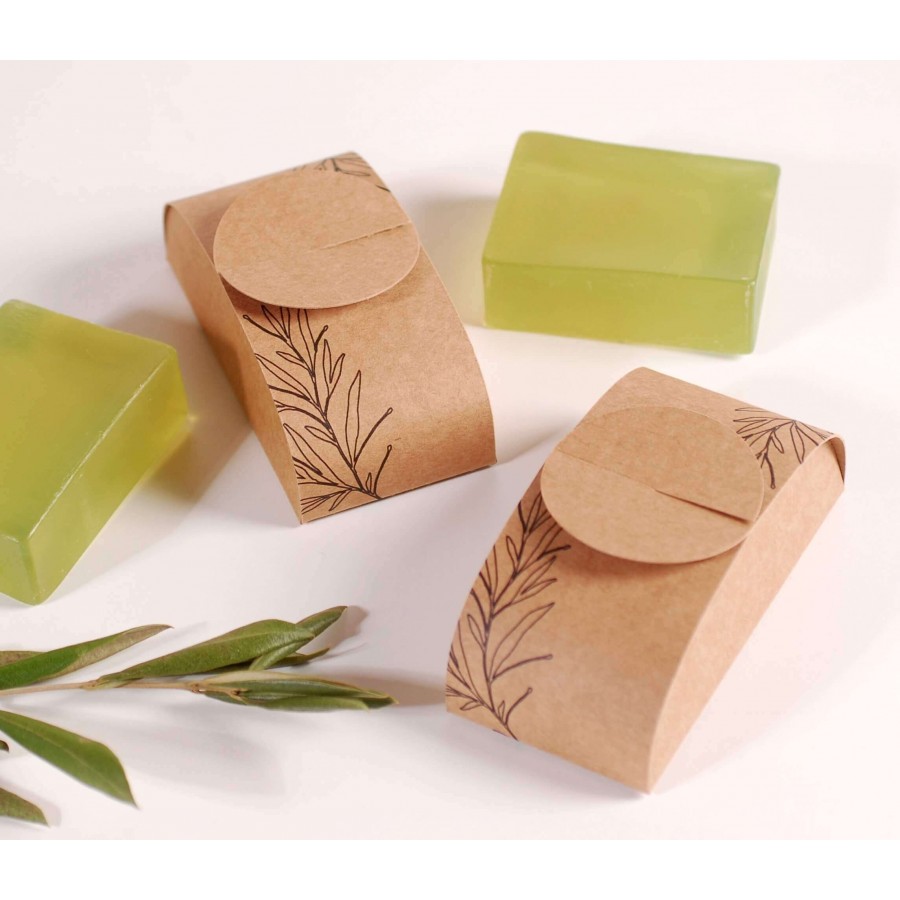
Kraft packaging is not limited to one particular visual style. It can support:
Minimalist branding
Botanical illustrations
Vintage-inspired designs
Modern typography
Natural colour palettes
Premium finishing details
When selecting kraft materials, businesses should still evaluate board thickness, print quality, structural performance, and the intended product environment. The appearance of a material is only one part of packaging performance.
Buying Wholesale Soap Boxes: What Should Businesses Consider?
For growing brands, purchasing wholesale soap boxes can make packaging procurement more manageable. Larger quantities may be suitable for businesses with predictable production volumes, but ordering decisions should be based on actual demand rather than unit price alone.
Businesses should evaluate several factors before committing to a packaging run:
Minimum order quantity
Box dimensions and material thickness
Printing requirements
Production lead time
Storage space
Shipping and delivery considerations
Customisation options
Quality control procedures
Reorder availability
It is also sensible to test packaging before placing a large production order. A sample can reveal whether the soap fits correctly, whether the box closes securely, whether the print matches expectations, and whether the package withstands ordinary handling.

For online sellers, businesses can also conduct a basic transit test by packaging the product as it would be shipped and examining it after simulated handling. While this is not a replacement for professional packaging testing, it can identify obvious weaknesses before a larger rollout.
Packaging providers such as The Quantum Print can be considered when businesses are researching custom packaging formats and specifications for soap products. The Quantum Print soap packaging boxes
Common Soap Packaging Challenges and Practical Solutions
One common challenge is poor product fit. If a soap bar moves excessively inside its box, corners can become damaged and the product may appear untidy when displayed. Accurate measurements and prototype testing can help solve this issue.
Another challenge is excessive packaging. Multiple unnecessary layers may increase costs and material consumption without providing meaningful protection. A correctly sized box can often deliver a cleaner presentation while reducing waste.
Moisture exposure can also be important. Soap is frequently associated with bathrooms, kitchens, and humid environments. The packaging material and storage conditions should therefore be assessed according to the product’s formulation and expected use.
Finally, some businesses struggle to balance branding with useful information. Packaging should not become so visually crowded that customers cannot quickly identify the product, scent, ingredients, weight, or other relevant details. A clear information hierarchy improves usability.
Final Thoughts
Effective soap packaging combines protection, presentation, information, and responsible material choices. From compact individual boxes to windowed retail designs and kraft-based formats, the right solution depends on the product, customer, distribution method, and brand positioning.
As packaging expectations continue to evolve, businesses can benefit from focusing less on decorative features alone and more on practical performance. Accurate sizing, clear labelling, appropriate materials, sustainable design considerations, and realistic testing can all contribute to a better packaging system.
Ultimately, successful packaging is not simply about making a soap bar look attractive. It is about creating a package that protects the product, communicates its value, supports the customer experience, and works efficiently throughout the supply chain.
Read More : Top 10 Things to Know Before Buying Kraft Bags in Bulk Top 10 Benefits of Using Kraft Paper Bags for UK Businesses Top 10 Reasons to Choose Paper Bags for Shopping and Retail Packaging