

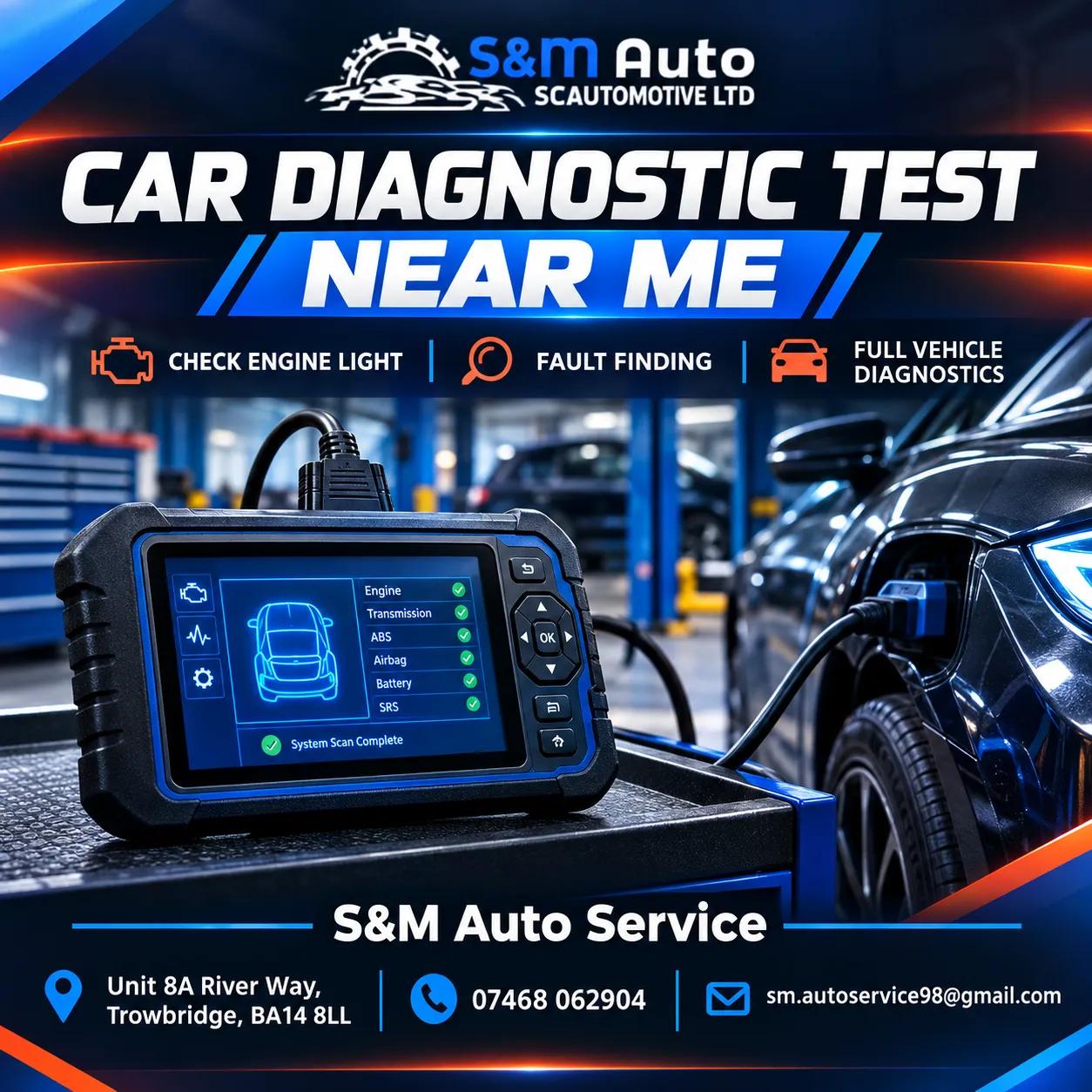
Modern cars rely on a growing number of electronic systems to manage engine performance, emissions, braking, safety, comfort, and fuel efficiency. When something goes wrong, the visible symptoms do not always reveal the real cause. A warning light, rough idle, poor acceleration, or increased fuel consumption can result from several different faults.
This is why a professional car diagnostic test Near Me can be a useful starting point when a vehicle develops an unexplained problem. Rather than relying only on symptoms, electronic diagnostics can help identify stored fault codes and point technicians toward systems that require further inspection.
What Is a Car Diagnostic Test?
A car diagnostic test involves connecting specialised diagnostic equipment to a vehicle’s onboard computer system. Most modern vehicles use an OBD (On-Board Diagnostics) system that monitors numerous components and records fault information when certain operating conditions fall outside expected parameters.
A diagnostic scan may provide information relating to areas such as:
Engine management
Exhaust and emissions systems
Sensors and actuators
Transmission systems
ABS and braking electronics
Airbag and safety systems
Battery and charging systems
Electronic control modules
However, a fault code does not always mean that the component named in the code needs immediate replacement. The code is usually a starting point for further investigation. A technician may need to inspect wiring, connectors, sensors, mechanical components, or live data before reaching an accurate conclusion.
When Should You Consider Vehicle Diagnostics?
Drivers often associate diagnostics with an illuminated engine management light, but there are other situations where testing can be useful.
For example, a vehicle may experience:
Intermittent warning lights
Difficulty starting
Uneven engine operation
Reduced acceleration
Poor fuel economy
Stalling
Unusual transmission behaviour
Electrical faults
Problems that appear and disappear without warning
In some cases, the vehicle may continue to drive normally even though a fault has been stored in its electronic system. Addressing potential problems earlier can make it easier to determine when and why an issue occurred.

For drivers searching for a car diagnostic test UK, it is important to understand that diagnostic scanning is not a substitute for a complete mechanical inspection. Electronic testing and physical inspection often work together to establish the underlying cause.
Common Challenges With Diagnostic Testing
One common misconception is that a diagnostic scanner automatically identifies the exact part that has failed. In reality, modern vehicle systems can be complicated.
For example, a faulty sensor reading could be caused by the sensor itself, damaged wiring, a poor electrical connection, or another mechanical issue affecting the sensor’s readings.
Another challenge is intermittent faults. Some problems may only occur when the vehicle is cold, under load, at a particular speed, or during certain driving conditions. In these situations, technicians may use live data, visual inspections, voltage measurements, and road testing alongside a diagnostic scan.
This makes proper interpretation of diagnostic information particularly important.
Choosing a Diagnostic Service Near You
When looking for an auto diagnostic near me, drivers should consider more than whether a garage has a diagnostic scanner. The quality of the process depends heavily on how the information is interpreted.
Useful questions to consider include:
Does the workshop diagnose the underlying problem rather than simply clearing fault codes?
Can it work with the vehicle’s relevant electronic systems?
Will diagnostic findings be explained clearly?
Are further mechanical or electrical checks available if required?
Will the technician distinguish between a stored code and a confirmed component failure?

Local knowledge can also be valuable. For motorists searching for car diagnostic Trowbridge, a nearby workshop can provide a practical option when a vehicle needs investigation without immediately committing to major repairs.
S&M Auto Service, for example, provides vehicle diagnostic services in Trowbridge, allowing diagnostic information to be considered alongside the vehicle’s symptoms and condition.
How Diagnostics Fit Into Preventive Maintenance
Vehicle diagnostics are increasingly becoming part of routine fault-finding rather than something used only after a major breakdown. As cars become more dependent on electronic control units and interconnected systems, understanding electronic fault information is becoming an important part of responsible vehicle maintenance.
Drivers can also help technicians by recording when a problem occurs. Details such as engine temperature, driving speed, warning-light behaviour, unusual noises, and recent repairs can provide useful context.
A sensible diagnostic process generally involves:
Listening carefully to the driver’s description of the problem
Scanning relevant electronic systems
Interpreting stored fault information
Checking live data where appropriate
Inspecting related mechanical and electrical components
Testing the suspected cause
Confirming the repair before returning the vehicle
This approach reduces the risk of replacing parts unnecessarily.

Final Takeaway
A diagnostic scan is most useful when it forms part of a structured investigation. Modern vehicles contain sophisticated electronic systems, and fault codes can provide valuable clues, but accurate diagnosis still depends on experience, testing, and understanding how different vehicle systems interact.
Whether a driver is searching for a car diagnostic test Near Me, researching diagnostic services across the UK, or dealing with an unexplained warning light, the key is to focus on identifying the underlying cause rather than simply clearing the fault message.
Used correctly, vehicle diagnostics can help technicians investigate problems more efficiently, support informed repair decisions, and contribute to safer and more reliable vehicle maintenance.